Electrostatic Separator Machine for Efficient Recycling

application/electrostatic-separator-machine, application/electrostatic-separator-machine, 
Inquiry
Inquiry

electrostatic separator machine

An electrostatic separator machine is a specialized piece of equipment designed to separate materials based on their electrostatic charge. This machine is particularly valuable in the recycling of waste cables and metals, allowing for efficient separation of different materials, which is crucial for maximizing recovery rates and ensuring quality in recycled products. For B2B buyers, concerns typically include the machine's specifications, reliability, sourcing suppliers, cost factors, and the specific features that enhance its performance. This article will provide insights into these aspects, helping purchasing managers and engineers make informed decisions.

Wholesale Options for Bulk Orders of Electrostatic Separator Machines

For companies looking to procure multiple electrostatic separator machines, exploring wholesale options can yield significant benefits. Many manufacturers, including Hangzhou Lansing Machinery Co., Ltd., offer discounts for bulk purchases, which can substantially lower the average cost per unit.

Negotiation Leverage: When ordering in bulk, buyers often have more room to negotiate terms. This can include price reductions, extended warranties, or additional services such as installation support.

Customization Opportunities: Bulk orders may also provide opportunities for customization. Manufacturers can design machines tailored to specific operational requirements or branding needs, which may not be available for single-unit purchases.

Lead Time Considerations: It's essential to discuss lead times upfront as bulk orders may require longer production schedules. Understanding these timelines helps organizations plan their operations accordingly and avoid disruptions.

Quality Assurance: When placing large orders, ensure that the supplier has robust quality control processes in place. Requesting samples or prototypes before finalizing an order can help validate the machine's performance against your specifications.

By leveraging wholesale options, companies can not only achieve cost savings but also enhance their operational efficiency through tailored solutions.

Where to Source Reliable Electrostatic Separator Machine Suppliers

Identifying trustworthy suppliers for electrostatic separator machines is critical for ensuring quality and performance. Here are some strategies for sourcing reliable manufacturers:

Industry Directories and Trade Shows: Utilize industry directories and attend trade shows focusing on recycling and manufacturing. These platforms often provide valuable insights into reputable suppliers and the latest technologies in the market.

Supplier Reviews and Ratings: Before engaging with a supplier, research their reputation through customer reviews and ratings. Feedback from previous buyers can offer insights into the reliability of the machines and the responsiveness of the supplier.

Certifications and Compliance: Verify that potential suppliers hold relevant certifications that demonstrate their adherence to industry standards. Certifications such as ISO 9001 can indicate a commitment to quality management processes.

Direct Communication: Establishing direct communication with potential suppliers is essential. Inquire about their manufacturing capabilities, lead times, and after-sales support. A responsive supplier is often indicative of good customer service.

Trial Orders: If possible, consider placing a trial order to assess the machine's performance and the supplier's reliability. This step can help mitigate risks associated with larger purchases.

By following these strategies, buyers can build a shortlist of reputable suppliers that align with their operational needs.

Cost Factors to Consider When Purchasing Electrostatic Separator Machines

Understanding the various cost factors involved in purchasing electrostatic separator machines is crucial for effective budgeting. Here are some key considerations:

Initial Purchase Price: The upfront cost of the machine is often the first consideration. However, it’s important to compare this against the machine's efficiency and expected lifespan to assess overall value.

Installation and Setup Costs: Consider additional costs associated with installation, which may include site preparation, labor, and any necessary modifications to existing systems. These costs can add up and should be factored into the total investment.

Operational Costs: Beyond the initial purchase, operational costs such as energy consumption, maintenance, and spare parts should be evaluated. Machines that are energy-efficient tend to have lower operating costs over time.

Warranty and Service Agreements: Evaluate what warranty terms and service agreements are offered with the purchase. A comprehensive warranty can protect against unforeseen issues, while service agreements can ensure ongoing support.

Financing Options: Some suppliers may offer financing options or leasing agreements. Assessing these can provide flexibility in cash flow management while acquiring necessary equipment. For example, investing in a LX-300A 100-150kg/h Copper Wire Granulator for Scrap Cables can be a strategic move.

Understanding these cost factors allows buyers to make a well-rounded financial decision when investing in electrostatic separator machines.

Features and Benefits

Electrostatic separator machines come equipped with various features that enhance their performance and operational efficiency. Here are some notable features and their corresponding benefits:

High-Voltage Electrostatic Fields: These machines utilize high-voltage electrostatic fields to facilitate the separation of materials. This technology allows for more effective separation of mixed materials, resulting in higher purity levels in recovered products.

User-Friendly Control Systems: Modern electrostatic separators often include user-friendly interfaces that simplify operation and monitoring. This can reduce training time for operators and enhance overall productivity.

Robust Construction: Many machines are built with durable materials designed to withstand harsh operating conditions. This robustness leads to longer machine lifespans and reduced downtime for repairs.

Modular Design: Some electrostatic separator machines feature a modular design, allowing for easy upgrades and maintenance. This adaptability can be crucial as operational needs evolve over time.

Environmental Benefits: By enabling the effective recycling of materials, these machines contribute to reduced waste and lower environmental impact, aligning with sustainability goals that many companies are now prioritizing.

Investing in an electrostatic separator machine with these features not only enhances operational efficiency but also supports a company's commitment to sustainable practices.

By understanding these various aspects of electrostatic separator machines, buyers are better equipped to make informed purchasing decisions that align with their operational and financial goals.

Key Specifications to Consider in Electrostatic Separator Machines

When evaluating electrostatic separator machines, several key specifications should be prioritized to ensure optimal performance for your specific application.

Separation Efficiency: This is often expressed as a percentage indicating how effectively the machine can separate different materials. A higher efficiency rate is crucial for maximizing recovery of valuable materials while minimizing waste.

Feed Capacity: This specification indicates the amount of material the machine can handle in a given time. Understanding the feed capacity helps buyers match the machine to their production needs and operational throughput.

Power Consumption: Energy efficiency is a significant factor in operational costs. Machines with lower power consumption can lead to significant savings over time, making it essential to factor this into the total cost of ownership.

Control Features: Advanced electrostatic separator machines come equipped with automated control systems that enhance precision in operation. These features can include adjustable settings for voltage and frequency, which allow for customization based on the material being processed.

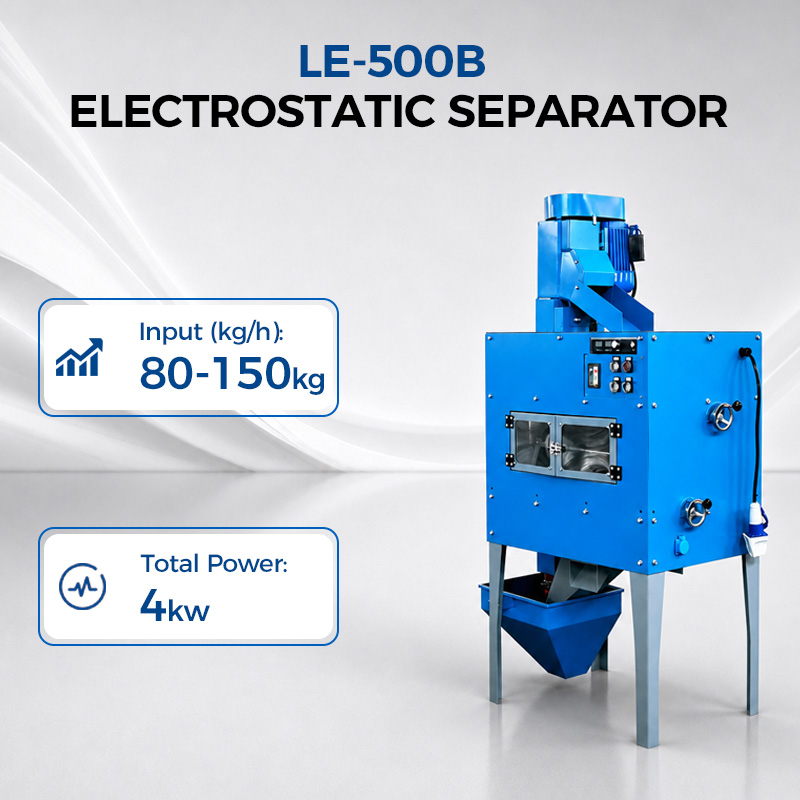
Material Compatibility: Different machines may be designed for specific materials, such as plastics or metals. Ensuring that the separator is compatible with the types of materials you plan to process is vital for achieving desired outcomes. For instance, the LE-500B Electrostatic Separator for Copper and Plastic Recovery is designed specifically for these materials.

Understanding these specifications enables buyers to select a machine that not only meets their operational needs but also aligns with their long-term financial goals.

Get a Free Quote

Tell us about your recycling needs, and our team will recommend the right equipment and solution for your project.
0/1000