wire-stripping-machine-or-copper-wire-granulator-how-to-choose-the-right-cable-recycling-equipment, wire-stripping-machine-or-copper-wire-granulator-how-to-choose-the-right-cable-recycling-equipment, /news
EN
Wire Stripping Machine or Copper Wire Granulator? How to Choose the Right Cable Recycling Equipment
Choosing the right equipment is an important step toward efficient copper recovery and manageable processing costs. For businesses handling scrap cables of different sizes, lengths and constructions, one question often comes first: should you invest in a wire stripping machine or a copper wire granulator?
The answer depends on your feedstock, daily processing requirements and the form of recovered copper you intend to sell. With more than 20 years of experience in recycling equipment manufacturing, Hangzhou Lansing Machinery Co., Ltd. offers wire stripping machines, copper wire granulators and supporting shredding equipment for a range of operating needs.
Two Different Approaches to Copper Recovery
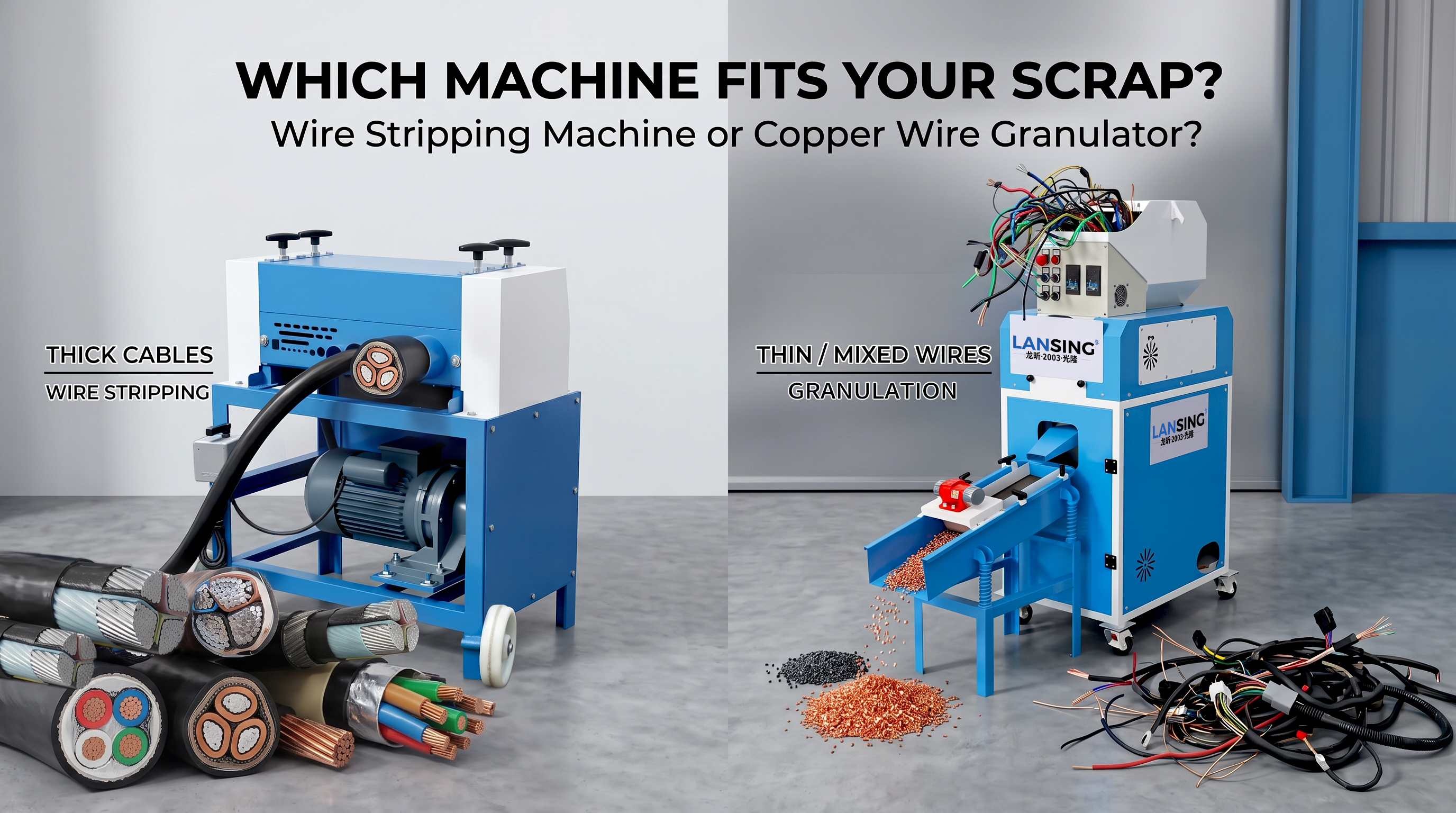
A wire stripping machine cuts through cable insulation so that the sheath and conductor can be separated manually or mechanically. This generally preserves the copper as wire or conductor lengths and can be a practical approach for cables that are reasonably consistent and easy to feed.
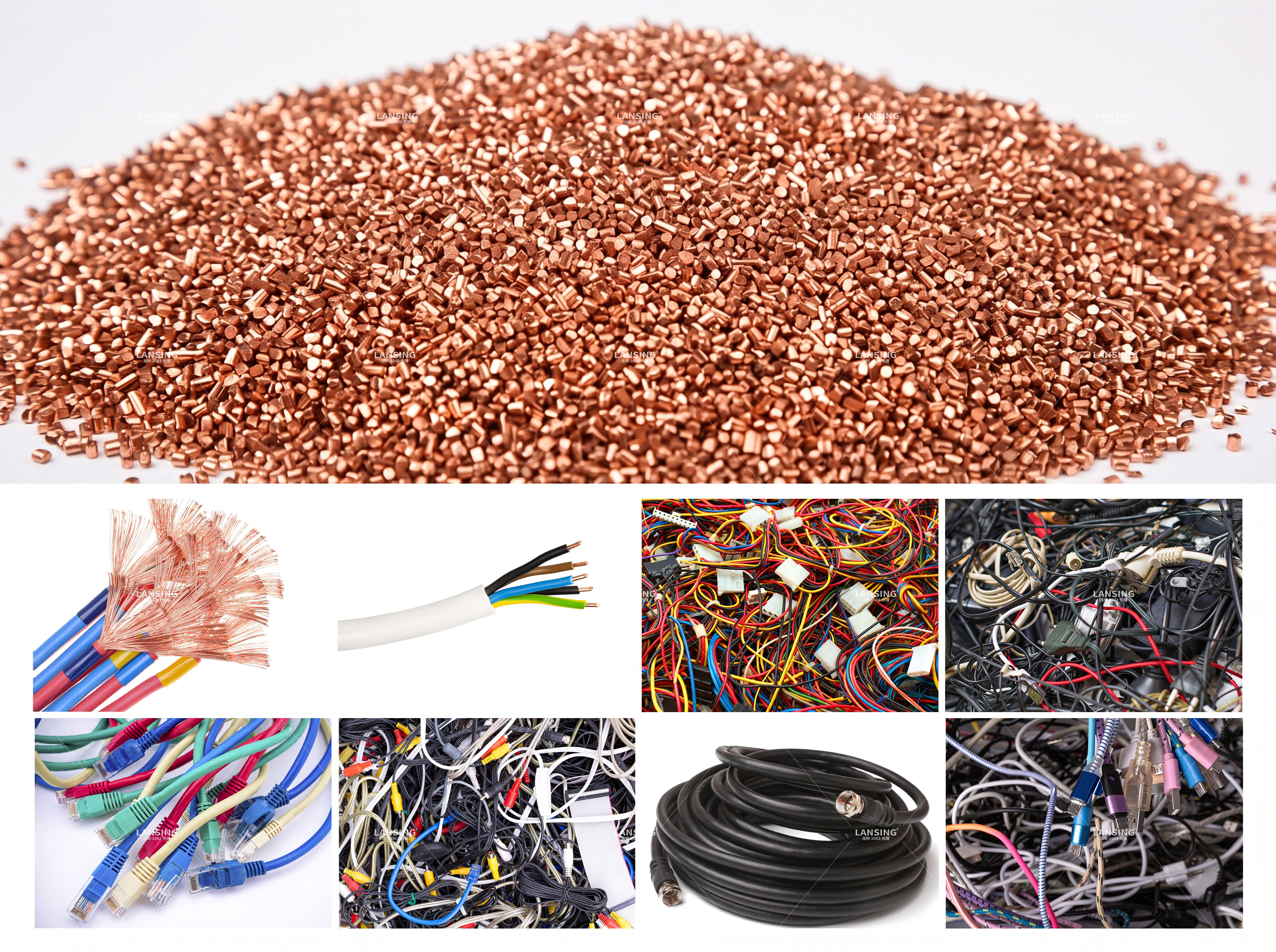
A copper wire granulator reduces cables into small particles to liberate the metal from its insulation. Depending on the configuration, airflow, vibration and density separation are then used to recover copper granules. Some feedstocks require pre-shredding or additional separation stages.
| Consideration | Wire Stripping Machine | Copper Wire Granulator |
| Processing method | Opens insulation for removal from the conductor | Granulates cable and separates copper from non-metallic material |
| Typical applications | Cables suitable for individual feeding, particularly larger cables | Short offcuts, fine wire and compatible mixed cable scrap |
| Recovered copper | Wire or conductor lengths | Copper granules |
| Operating requirements | Feeding, blade adjustment and insulation removal | Feedstock preparation, controlled feeding and separation adjustment |
| Initial investment | Basic installations generally require less capital | Varies significantly with capacity and supporting equipment |
| Space requirements | Often compact, with additional room needed for cable handling | Ranges from compact machines to complete processing lines |
| Main selection factors | Cable outside diameter, insulation and construction | Feedstock composition, fine-wire content, throughput and output requirements |
When Is a Wire Stripping Machine the Better Starting Point?
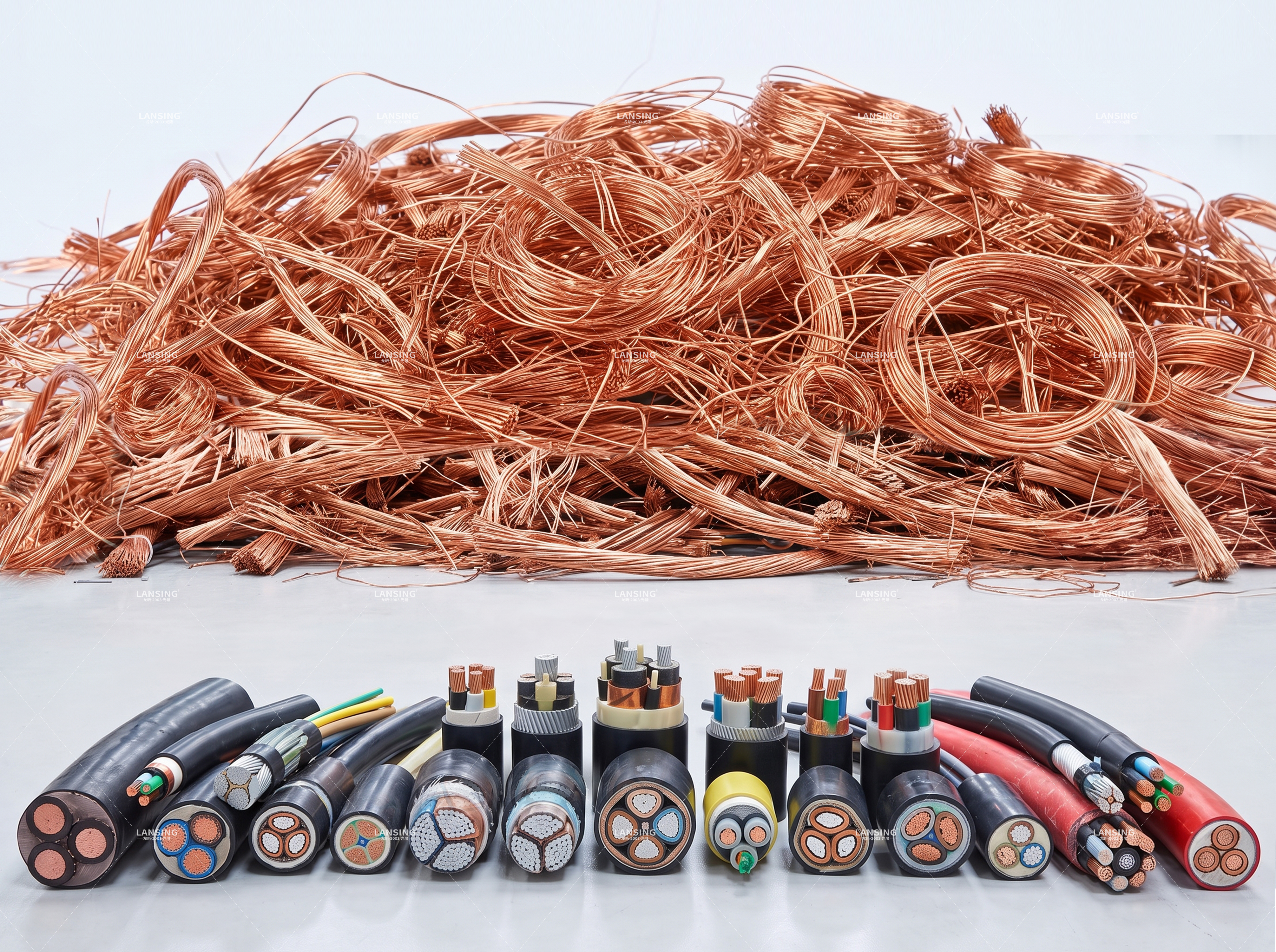
Stripping is worth considering when your feedstock consists mainly of larger, longer cables that can be organized and fed efficiently. Opening the insulation directly preserves the conductor and can avoid unnecessary size reduction.
Cable size alone is not enough to select a machine. Conductor cross-sectional area and overall cable diameter are different measurements. Insulation thickness and hardness, multicore construction and the presence of armor also affect processing requirements.
Likewise, stripped copper does not automatically qualify as bare bright copper. Tinning, oxidation, contamination and the buyer’s grading requirements all influence its selling price. Recovery value should therefore be assessed against the actual material and intended sales outlet.
Lansing can review cable photographs, dimensions and samples to recommend a suitable stripping machine and demonstrate its performance through material trials.
When Should You Consider a Copper Wire Granulator?
Granulation is often worth evaluating for short offcuts, fine wire and mixed cable scrap that would be labor-intensive to strip individually. Suitable automotive wiring, appliance wiring and cable manufacturing scrap are examples of potential applications.
However, feedstock preparation remains important. Plugs, terminals, steel components and other contaminants must be managed according to the equipment’s requirements. Long, tangled or bulky material may need cutting or pre-shredding, while very fine conductors and unusual insulation materials should be tested to establish separation performance.
Lansing can assess the LX-400C copper wire granulator or a combination of the LS-400 shredder and LX-400C granulator, depending on the application. For projects requiring greater throughput, the Model 600 granulator and a supporting processing line can also be considered. Final selection should be based on feedstock trials, required capacity and site conditions.
A Combined Approach Can Offer Greater Flexibility
For recyclers receiving both larger cables and mixed fine wire, stripping and granulation can serve complementary roles.
Cables that strip efficiently can follow one processing route, while suitable short wire and mixed scrap enter the granulation line. Separating these material streams can reduce unnecessary processing and provide greater flexibility as the feedstock mix changes.
Lansing can help customers assess standalone equipment, combined installations or a phased expansion plan based on the proportions and volumes of material they receive.
Compare the Total Cost of Processing
The purchase price is only one part of an equipment investment. Feedstock availability, labor, electricity, blade wear, spare parts, floor space, dust collection and maintenance all affect the cost of processing each tonne of cable.
It is also important to distinguish three measures of performance. Throughput describes the amount of cable processed. Copper recovery measures how much of the copper in that feedstock is recovered. Product purity describes the quality of the recovered copper fraction. A strong result in one measure does not establish the others.
A representative trial should examine the incoming material, the recovered copper and any copper remaining in the plastic output. This provides a more useful basis for equipment selection than a nominal capacity figure alone.
Support from Initial Assessment to Ongoing Operation
Lansing provides equipment specifications, configuration details and operating videos during the enquiry stage. Customers can also arrange sample testing, remote factory inspections through Zoom and on-site demonstrations.
Engineers review feedstock, throughput requirements, available space and budget to develop an appropriate equipment layout and processing route. Customization may include supply voltage, machine color, motors, blades and selected structural features, subject to engineering review.
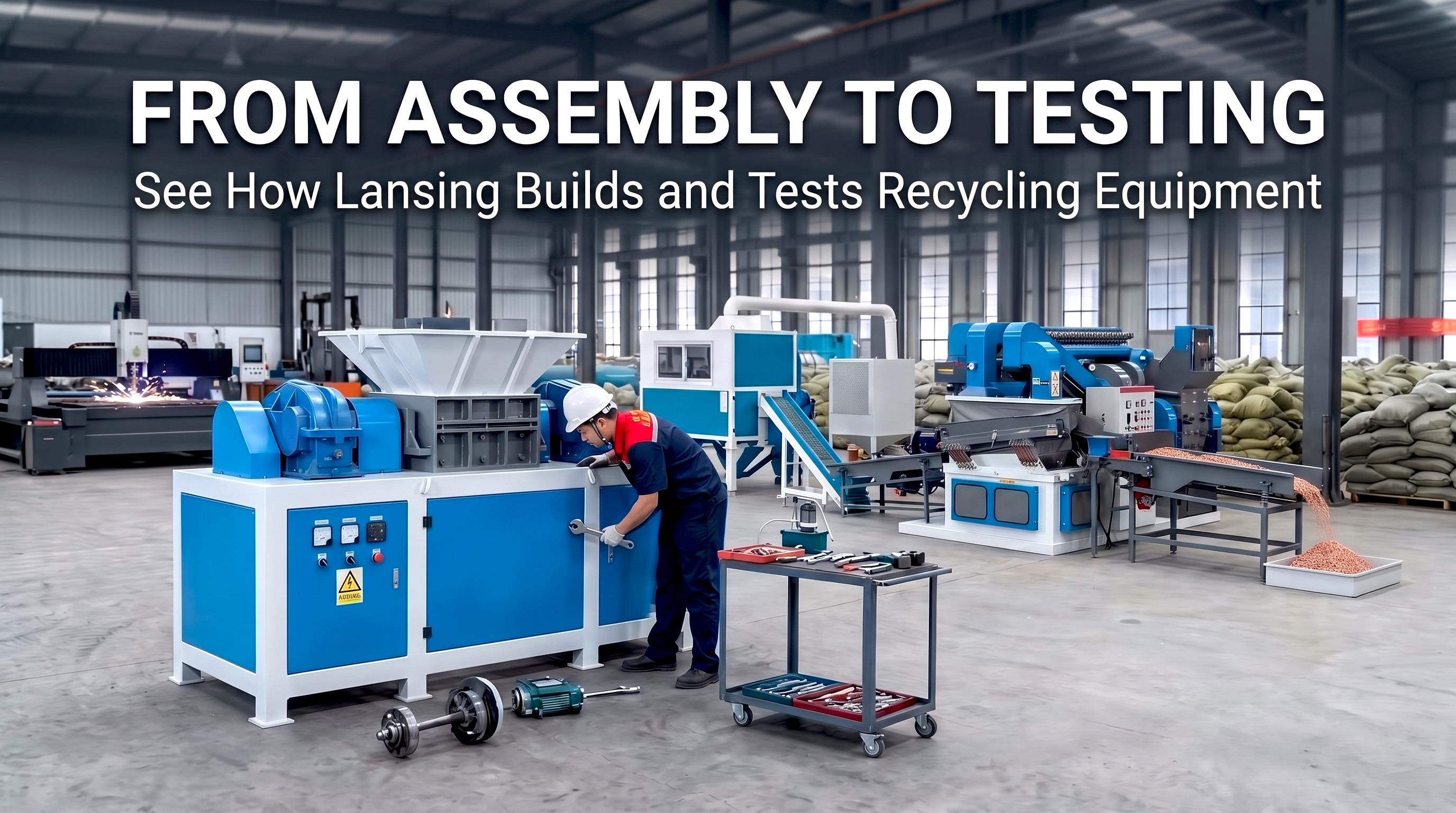
After manufacturing and assembly, Lansing provides test-run videos and photographs, with shipment arranged through the agreed inspection and confirmation process. Operating manuals, maintenance videos, wear-part replacement guidance and long-term spare parts support are available to assist customers after delivery.
Start with Your Feedstock
The right choice between stripping and granulation begins with the material you actually process.
Share your cable photographs or videos, size range, expected daily volume, local power supply and available floor space with Lansing. Our team can help assess a wire stripping machine, copper wire granulator or combined recycling line based on your operating requirements and material test results.


 EN