from-assembly-to-test-runs-inside-lansings-recycling-equipment-workshop, from-assembly-to-test-runs-inside-lansings-recycling-equipment-workshop, /news
EN
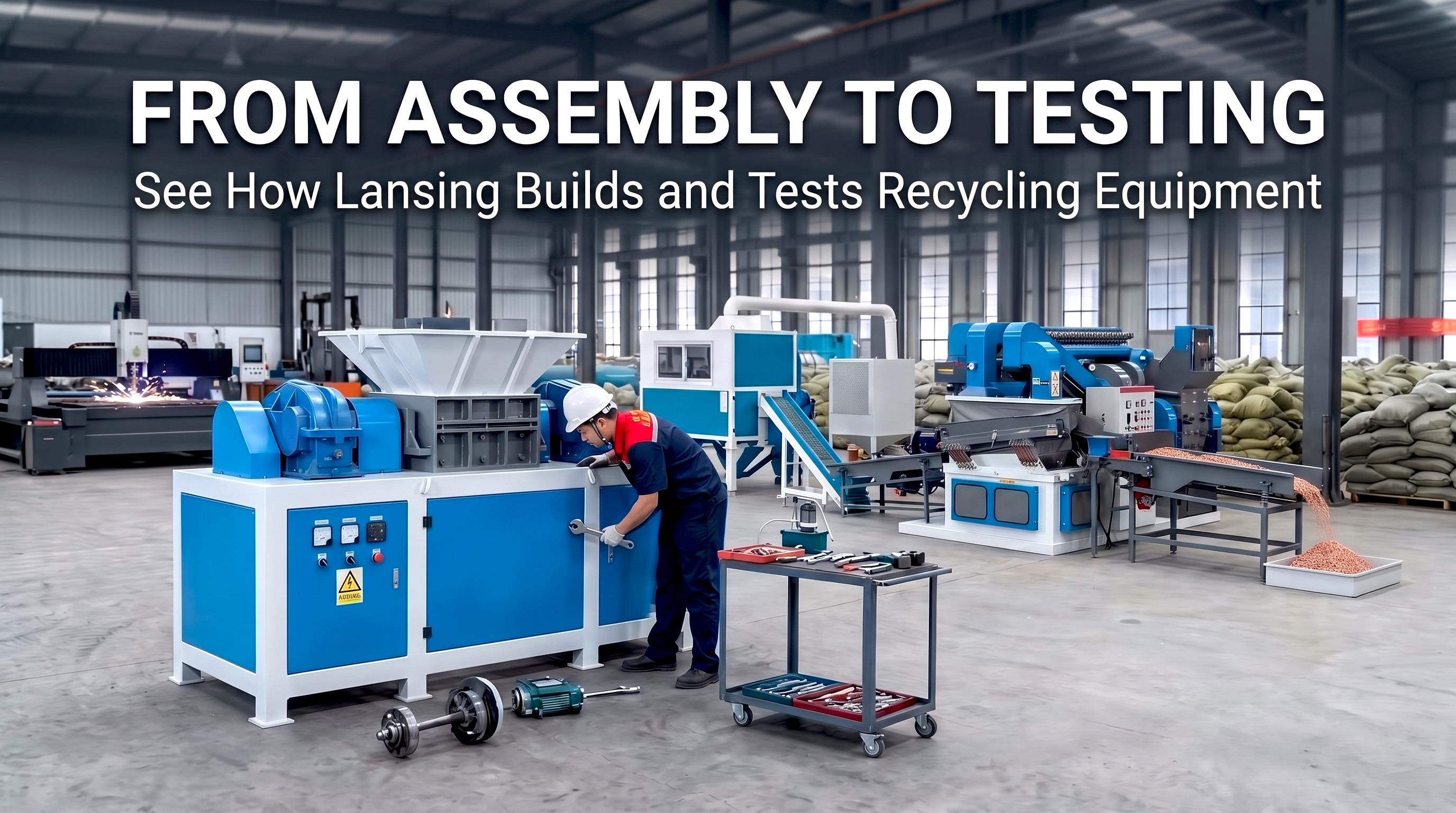
The value of a recycling machine extends beyond its appearance and purchase price. It is also reflected in manufacturing quality, feedstock compatibility and the support available after delivery.
When sourcing a wire stripping machine, copper wire granulator or shredder, buyers often face a familiar question: why do machines that look similar carry substantially different prices?
Another concern arises when equipment performs well in a demonstration but proves difficult to operate, produces disappointing separation results or fails to meet expectations once installed.
Price differences can reflect capacity, component specifications, manufacturing processes and service scope. Differences in operating performance may also result from feedstock changes, equipment selection, installation or machine settings. Understanding how a machine is built and tested provides a stronger basis for comparison.
Inside Lansing’s manufacturing workshop, these details form an essential part of the equipment supplied to customers.
Similar Appearance Does Not Mean Equivalent Performance
In a dry copper wire granulator, the frame and enclosure are only part of the system. Material liberation during granulation, screen selection, consistent feeding and the interaction between airflow and vibration all influence separation performance.
When settings do not suit the feedstock, copper may be lost into the plastic fraction, or insulation particles may remain in the recovered copper. Appropriate configuration and practical adjustment are therefore important considerations alongside the machine’s physical construction.
Blades, motors, drive components and structural parts also need to suit the intended duty. A particular steel grade, plate thickness or component brand cannot establish the quality of the complete machine on its own. Design, fabrication, assembly and maintenance all contribute to operating performance.
Improving Consistency Through Laser Cutting
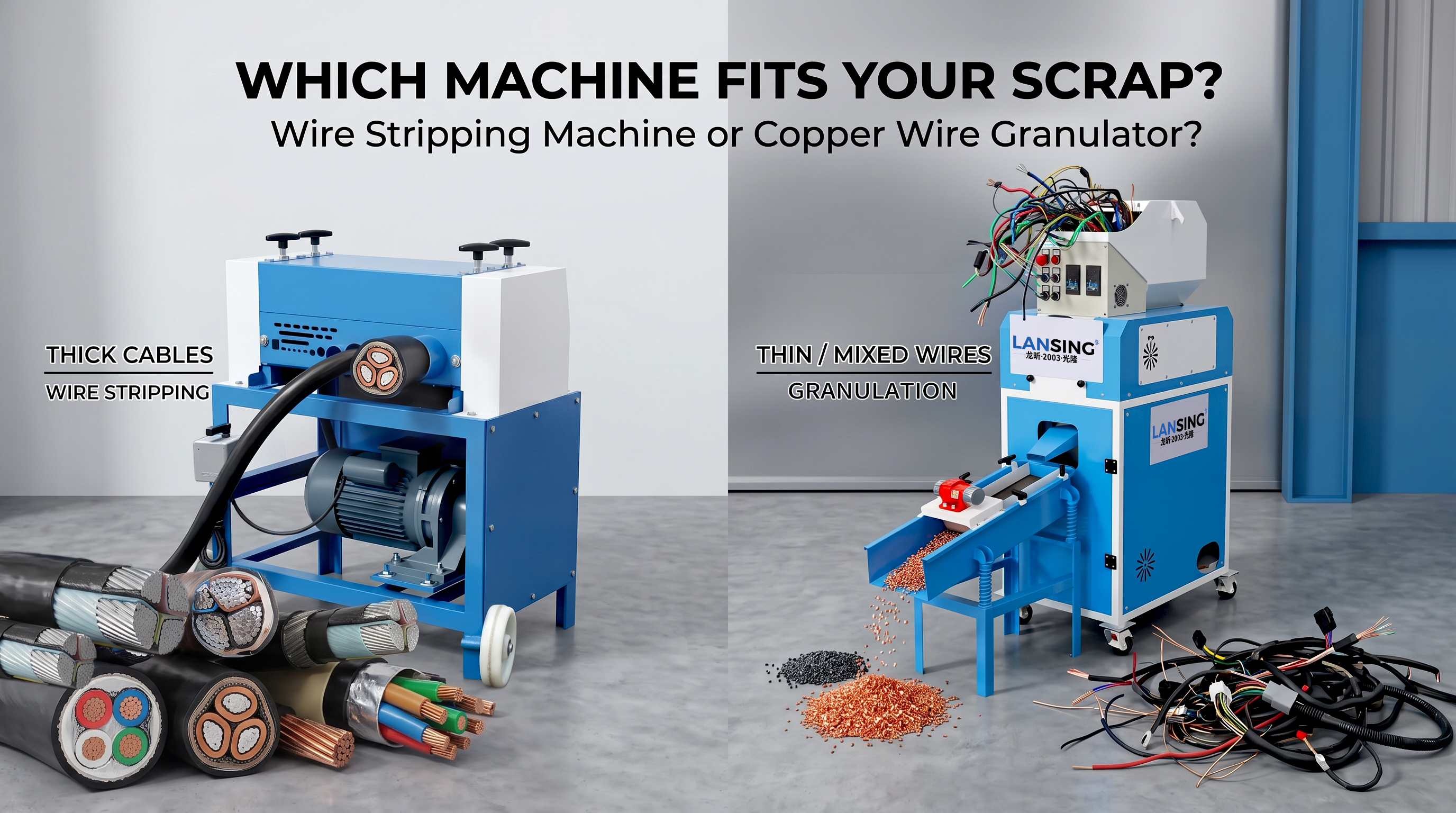
Lansing has more than 20 years of experience in developing and manufacturing recycling equipment. Its range includes wire stripping machines, copper wire granulators, shredders and supporting recycling lines, with granulator configurations spanning the 100, 200, 300, 400, 600 and 800 model series.
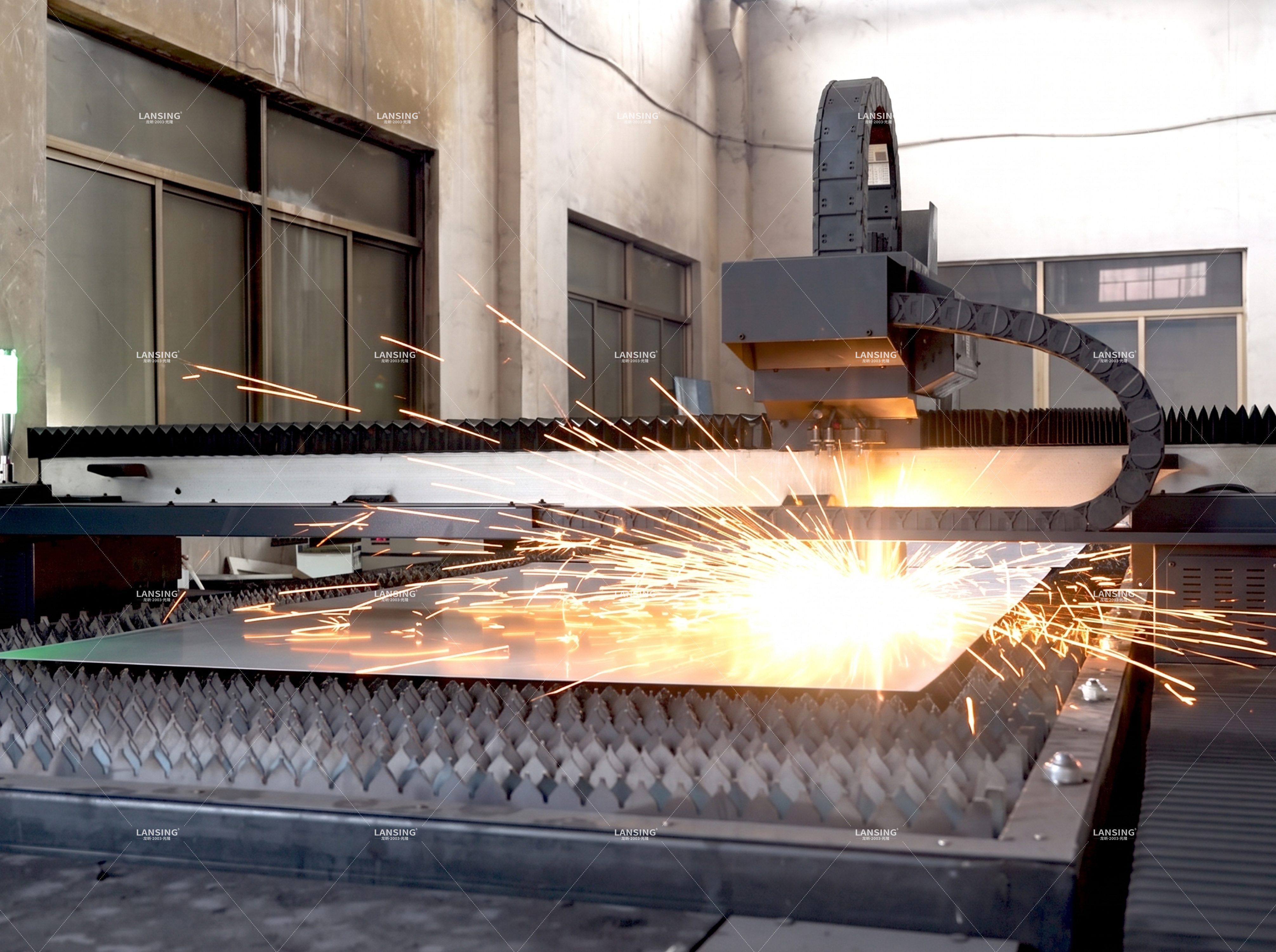
The factory has invested in multiple laser cutting machines to improve the production of relevant sheet-metal components.
Cutting to design drawings helps maintain consistent part profiles, hole positions and dimensions across production batches. This provides a more reliable starting point for subsequent fitting and welding.
These details may not be obvious in a finished-machine photograph, but they contribute to manufacturing consistency.
For fine data cables and mixed fine-wire scrap, Lansing also continues to refine screen and airflow configurations, using material trials to assess suitability. Equipment selection is matched to feedstock composition, required throughput and site conditions.
Why Welding Quality Matters
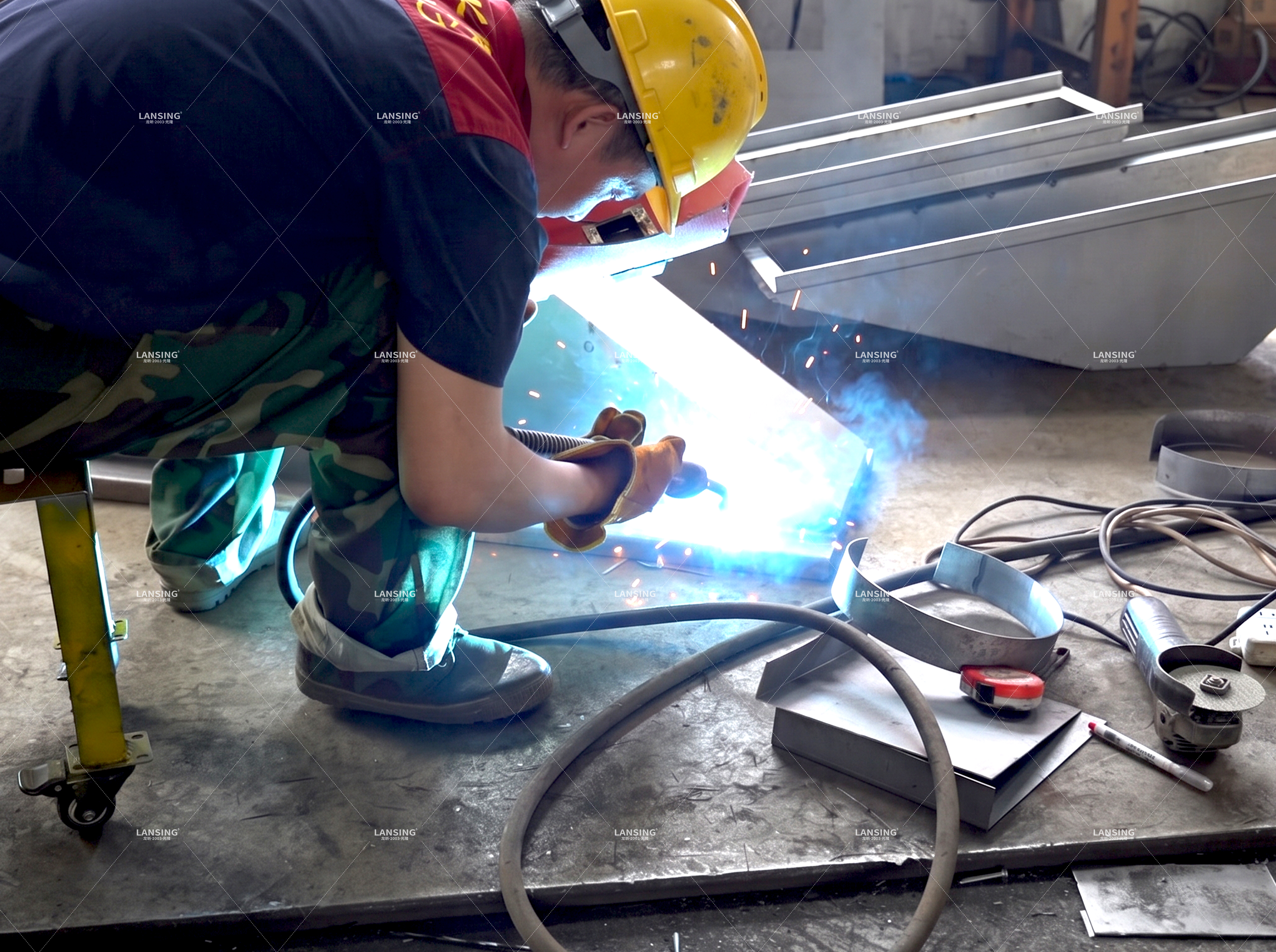
During operation, machine frames and connected structures must support equipment weight, vibration and processing loads. Welds therefore contribute both to structural integrity and to the alignment required for assembly.
Lansing primarily uses CO₂-shielded arc welding and manual metal arc welding, selecting the process according to the component and fabrication requirements.
Good welding depends on joint preparation, suitable parameters, workmanship and inspection. Managing welding sequence and heat input helps limit distortion, while attention to defects such as porosity and lack of fusion supports joint quality. This makes welding a critical manufacturing stage that requires more than a visual assessment of the finished bead. Technical reference: TWI
Surface Preparation Before Coating
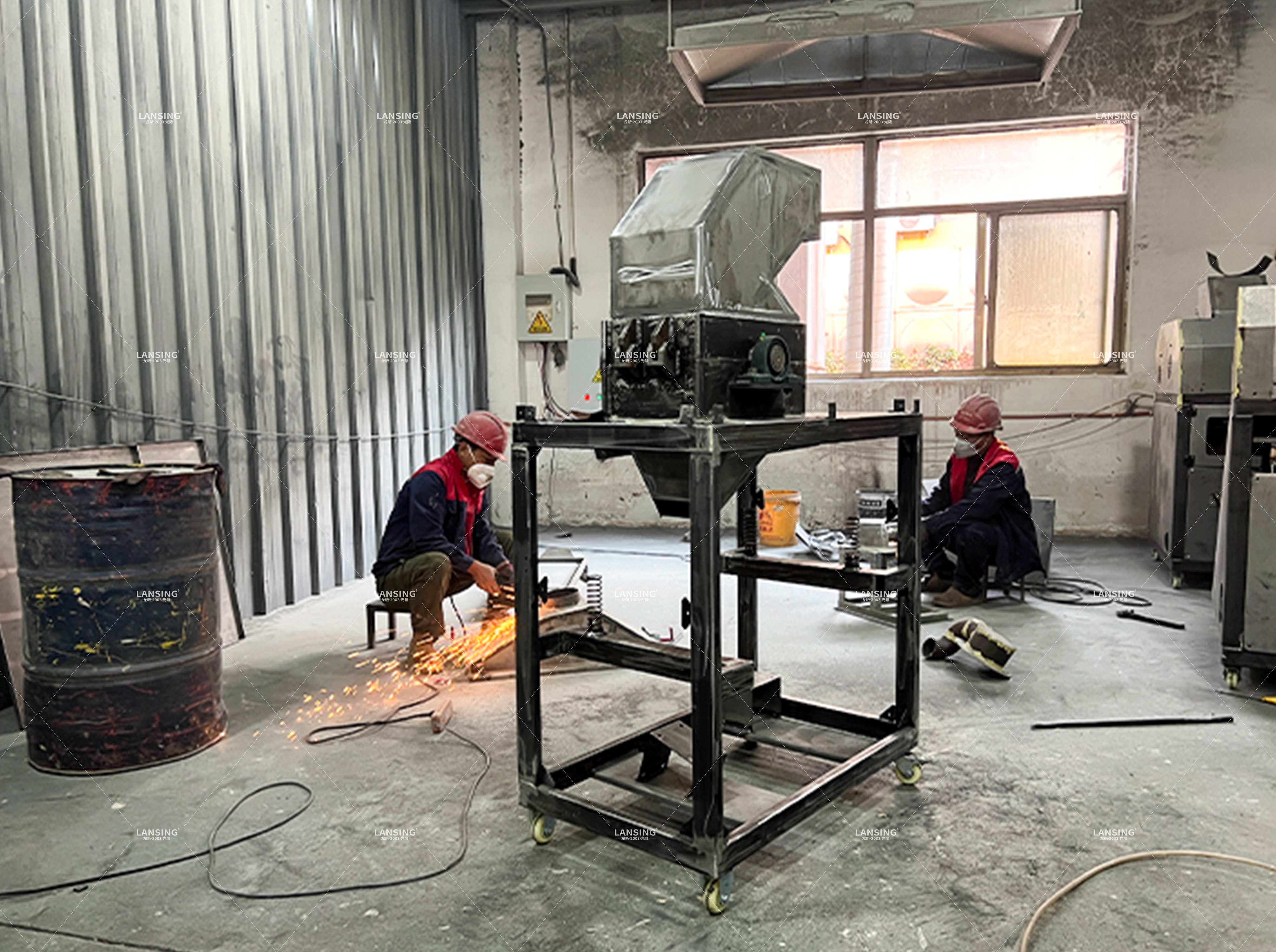
After welding, Lansing carries out grinding and surface finishing before powder coating. This includes addressing burrs, weld spatter and areas requiring finishing in preparation for the coating stage.
The process takes skilled labor and time. Its purpose extends beyond appearance: it helps prepare the surface for subsequent coating.
Surface finishing does not replace weld quality control. Coating adhesion and corrosion resistance also depend on cleanliness, pretreatment, coating selection and curing conditions. Each stage contributes to the final result. Technical reference: Powder Coating Institute
Moving from Liquid Paint to Powder Coating
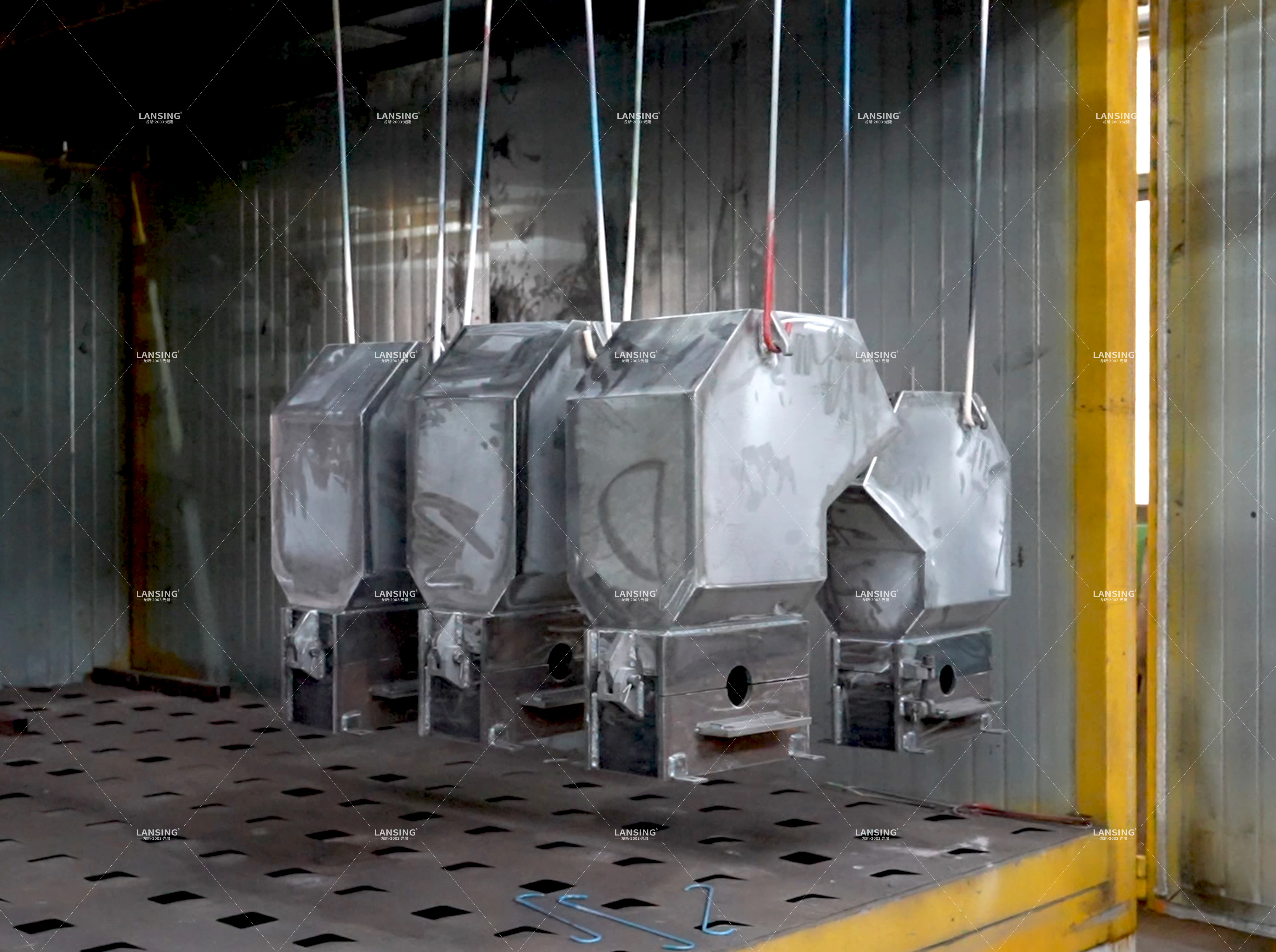
Lansing has upgraded the finish on relevant equipment components from conventional liquid paint to powder coating.
Powder coating typically uses electrostatic application to deposit dry powder onto a metal surface, followed by heat curing. With a suitable coating system, proper preparation and controlled curing, the process can provide a durable finish with resistance to abrasion, scratching and corrosion.
| Consideration | Conventional Liquid Paint | Powder Coating |
| Application | Liquid coating followed by drying or curing | Dry powder application followed by heat curing |
| Protective performance | Depends on the coating system and application quality | Suitable systems offer good mechanical durability and protection |
| Solvent use | Solvent-based paints use organic solvents; waterborne systems differ | Conventional dry powder application does not require a liquid solvent carrier |
| Process controls | Preparation, mixing, film thickness and drying conditions | Preparation, film thickness and curing conditions |
Powder coating delivers its benefits as part of a controlled finishing process. Lansing’s approach combines the coating upgrade with attention to the preparation that precedes it. Technical reference: Powder Coating Institute
Testing with Feedstock That Reflects Real Applications
Scrap cable is not a uniform raw material. Larger conductors, fine data cables, wiring with connectors, and cables containing oil or filling gel can present different processing requirements.
A demonstration using only easily separated material cannot establish suitability for every application.
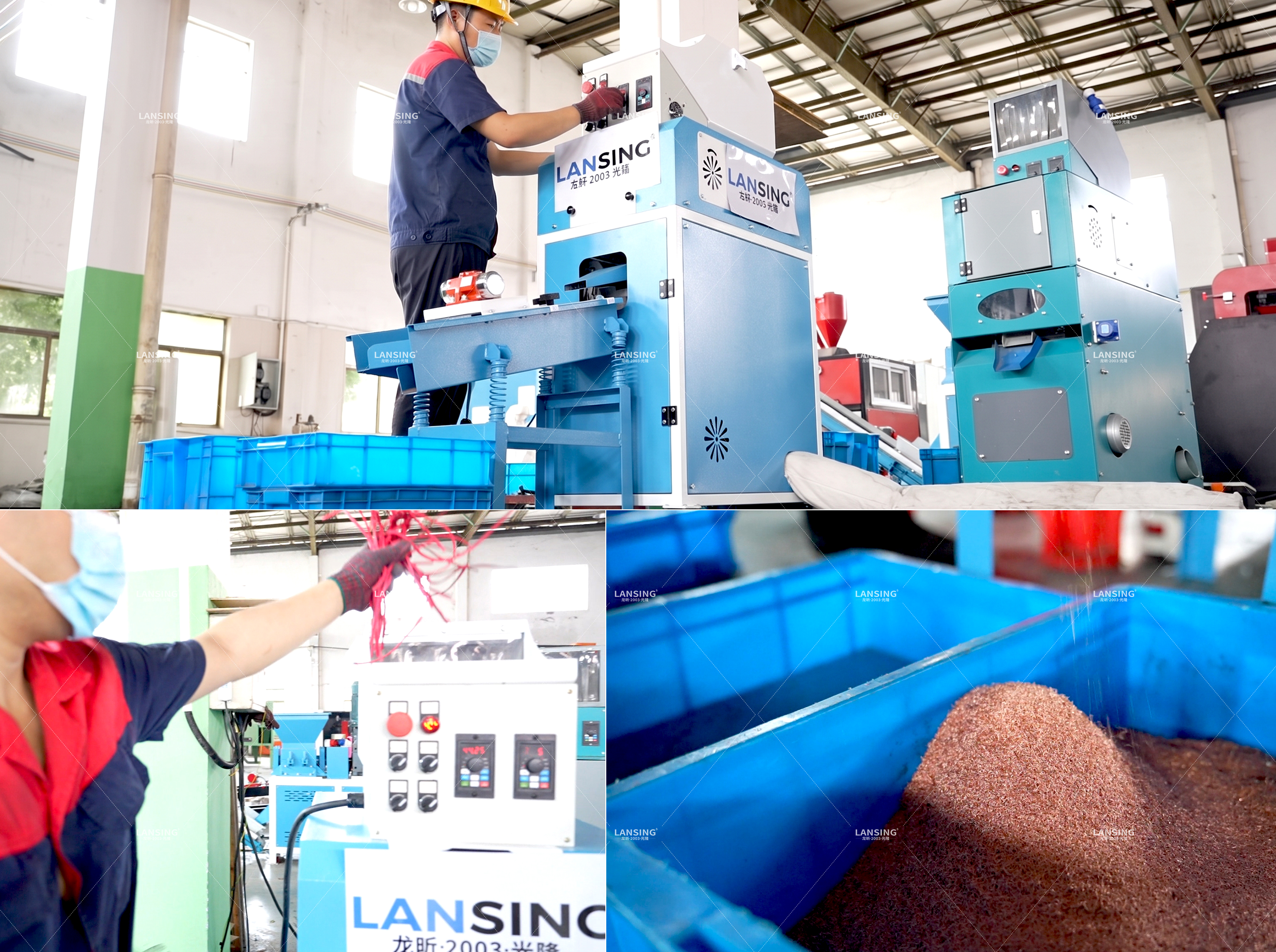
Lansing regularly sources different types of local cable scrap, including network cables, cables with plugs, audio cables and selected oil- or gel-containing cables, to assess their processing requirements. For unusual material, the team first evaluates whether connector removal, cleaning, cutting or pre-shredding is needed before deciding how to conduct a trial.
Customers can supply their own samples or agree on representative material for an initial demonstration. Comparable feedstock provides useful guidance, while testing the customer’s actual material offers a stronger basis for final configuration.
During an on-site or remote demonstration, customers can observe feeding, machine operation and both output fractions—not simply a photograph of the recovered copper.
From Final Assembly to Dispatch Approval
After assembly, Lansing arranges material test runs for the order to check machine operation and processing performance. Videos and photographs are provided for customer review.
The sales team confirms the equipment configuration, trial results and agreed delivery scope with the customer before arranging packing and shipment. Any points requiring further adjustment or verification are addressed through this process.
Customers can also review the manufacturing workflow and request model-specific technical information, applicable CE documentation and relevant patent records, alongside a factory visit or equipment trial.
Protective Packing Is Part of the Delivery Process
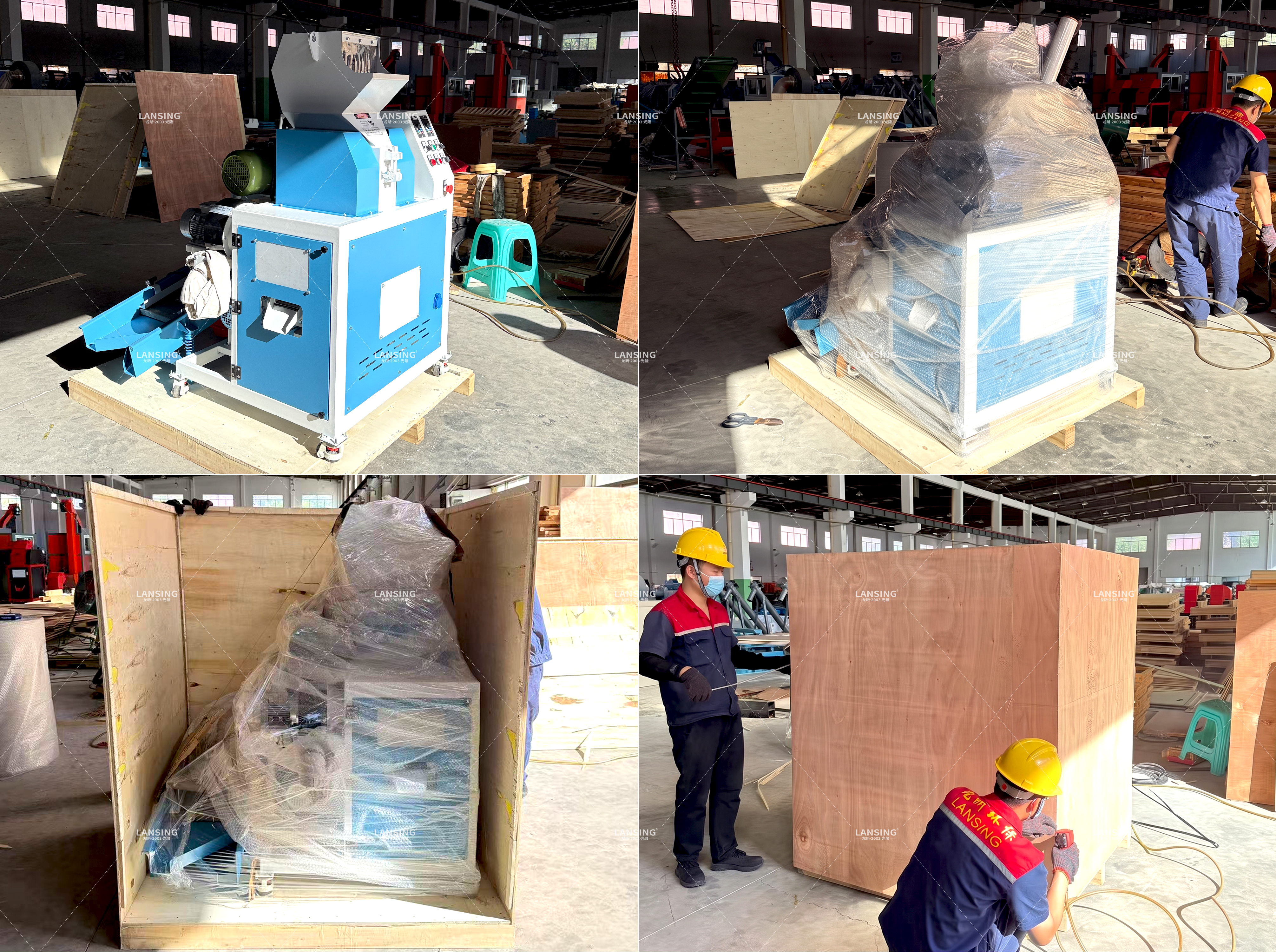
Once testing is complete, the equipment must still withstand handling and transport. Lansing uses plywood shipping cases with securing and protective measures appropriate to the machine.
Equipment is fixed to the shipping base to reduce movement, wrapped in protective film, and cushioned around protruding or irregular sections using materials such as polyethylene foam. The surrounding case panels provide additional external protection.
These measures are intended to reduce movement, rubbing and impact during transport, extending attention to quality beyond the workshop.
Confidence Built on a Process You Can Verify
Purchasing recycling equipment involves more than choosing a machine. It also means selecting a suitable processing configuration, a dependable delivery process and a supplier that can support maintenance after installation.
From laser cutting, welding and surface preparation to assembly, representative material trials and protective packing, Lansing treats these steps as the foundation of a long-term customer relationship. Operating information, maintenance guidance and replacement parts support continue that relationship after delivery.
Comparing wire stripping machines, copper wire granulators or shredders?
Contact Lansing with photographs or videos of your feedstock, your expected processing volume and your site requirements.
Our team can help assess a suitable configuration and arrange a remote factory tour, sample test or on-site visit.
We invite you to build confidence in Lansing through the manufacturing process you can inspect, the material trials you can evaluate and the clear, accountable communication you receive before and after purchase.


 EN